



How to Practice the Mindful Relaxation Using Non-Sleep Deep Rest (NSDR) in 2023

Hi there, today I want to talk about how to bring calmness into your daily life. In my last article, I explained how to apply mindful exercise routines in your daily life without effort. Continuing on the mindful practice, I want to explain the importance of the “mindful relaxation” and “NSDR” practices” that you need to incorporate into your daily life and how to apply NSDR using the non-sleep deep rest method.
Why is Mindful Relaxation Important?
It’s essential to prioritize mindful relaxation for both mental and physical well-being. In today’s fast-paced society, we are constantly bombarded with overwhelming information. For instance, simply taking a break from checking social media platforms like Instagram or TikTok for a short period of time can result in numerous updates that may be difficult to keep up with. In this information-saturated era, practicing being present and fully aware of yourself and your surroundings is crucial. Mindful relaxation effectively brings you back to your center and helps you recognize your desires, emotions, and personal identity.
What are the Benefits of Practicing Mindful Relaxation?
Research has demonstrated that practicing mindful relaxation is highly effective and offers numerous benefits. In today’s complex and stressful world, mindfulness techniques can be a practical and effective way to improve your quality of life.
Below are some of the benefits of mindful relaxation based on research and studies:
Anxiety and Depression Alleviation: According to the research, mindful meditation is recognized for reducing anxiety and depression symptoms. It promotes calmness, which is particularly valuable in today’s fast-paced world.
Enhanced Psychological Well-being: Mindfulness practices are linked to improved mood, increased positive emotions, and reduced emotional reactivity. Following the studies, these practices can significantly alleviate job burnout, a common issue in modern work culture.
Health Benefits: Mindfulness and meditation are associated with various health benefits. Recent studies have delved into its effectiveness in managing stress, depression, pain, and symptoms related to withdrawal from substances like nicotine, alcohol, or opioids.
Stress Reduction: A comprehensive review of over 200 studies revealed that mindfulness-based therapy notably reduces stress, a prevalent issue in modern society.
Improved Behavioral Regulation: According to a study, mindfulness leads to increased subjective well-being, reduced psychological symptoms, and enhanced behavioral regulation, which is all crucial for maintaining a balanced life in today’s demanding environment.
How to Practice Mindful Relaxation by Using Non-Sleep Deep Rest Method?
What is the Non-Sleep Deep Rest (NSDR) Method?
NSDR is a state of deep relaxation that is similar to deep sleep but doesn’t actually involve sleeping. It’s like a meditation that can put you into a dream-like state, allowing your mind to rest while still awake. NSDR usually involves controlled breathing and body scanning, which promotes increased awareness and relaxation. Dr. Andrew Huberman, a neuroscientist, introduced it, and it’s likened to a form of meditation (although it is not categorized as a meditation method), particularly Yoga Nidra from ancient India. According to Yoga Nidra, individuals attain a relaxed state of mind akin to the phase just before falling asleep, without actually sleeping.
How to practice it?
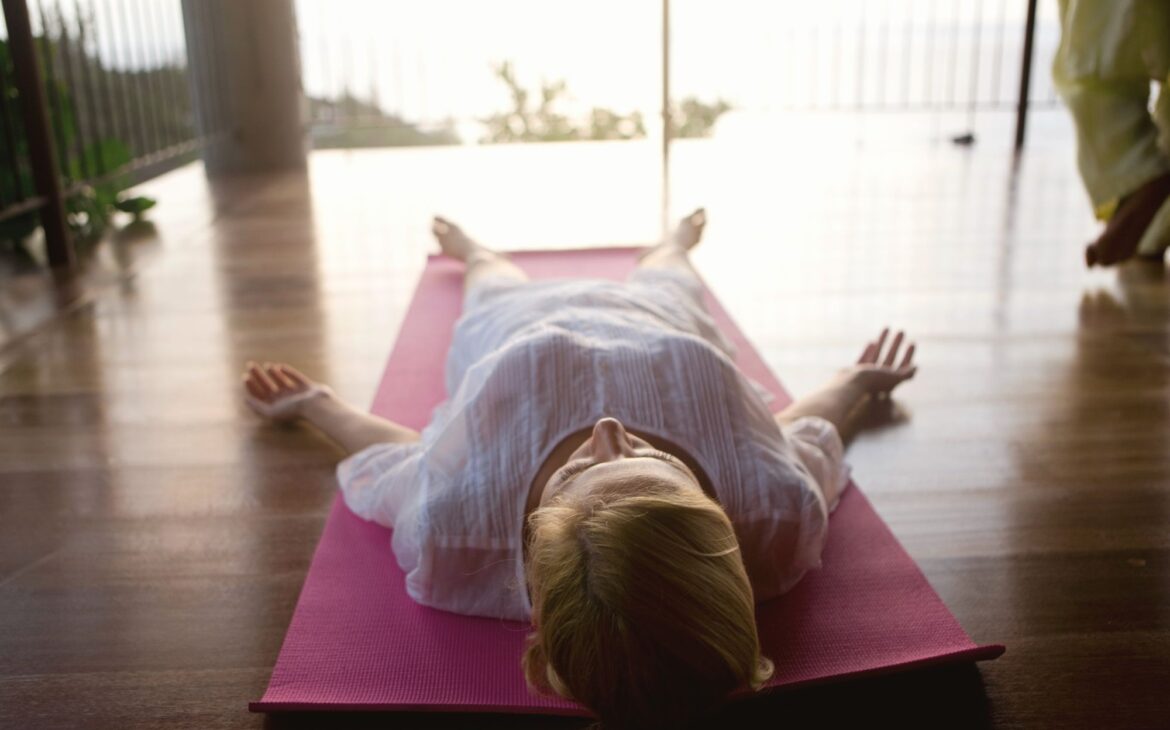
When I was young, I used to have trouble sleeping. My mother, who is a yoga and meditation instructor, would advise me to lie down and close my eyes. She would suggest I take deep breaths in through my nose and exhale slowly through my mouth. Doing so would make me aware of my heart rate slowing down and my body relaxing. With this calming feeling, I drifted off to sleep.
I later learned that my mother was teaching me Yoga Nidra practice. After coming across NSDR, I understood that the practice I had been doing was NSDR. Dr. Huberman’s NSDR protocol is a great way to follow and practice NSDR.
Is it really working?
I have already tried NSDR, and it has given me great experiences. During this practice, you are not actually sleeping, but it feels like you are. You will notice that your body becomes heavier and calmer. Although your mind remains awake, your body is as relaxed as if you were sleeping, which helps to recharge your body and rest your mind. Through practicing NSDR, you can tune out your thinking brain and achieve a state of calmness. According to the study, practices like Yoga Nidra and NSDR can reset a specific brain area by enabling neuromodulators like dopamine, which may aid in motor planning and execution.
Personally, I find NSDR most effective when I am lying in bed and trying to sleep. It helps me to clear my thoughts and focus on the sensation of my body. Eventually, I drift off to sleep with the flow of my body.
How long does it take?
NSDR, or Non-Somatic Sensory Deconditioning, is unlike a typical TV episode with a set duration. The length of time it takes to complete NSDR depends on your schedule and whether you reach the desired state of mindful relaxation. It can take as little as 10 to 15 minutes or even several hours. It’s essential to be aware when practicing NSDR to ensure that you truly achieve mindful relaxation.
Final Thoughts on Mindful Relaxation NSDR Practice

NSDR is all about finding inner peace and relaxation, which can help improve your cognitive abilities and even promote better learning. However, it’s essential to remember that this practice’s benefits may vary from person to person. While it can be a great addition to your mindful relaxation routine, it’s not meant to replace the benefits of a good night’s sleep. So, give it a try and see how it works for you!
If you’re seeking to incorporate mindfulness into your daily life, try these 7 simple and practical mindful exercises to get started right away. Additionally, check out Headspace if you’re interested in guided meditation. Use this link (affiliate link) to enjoy a free trial of 7 to 14 days to help jumpstart your mindfulness journey and share your experiences and tips, if any. Good luck on your mindfulness journey!